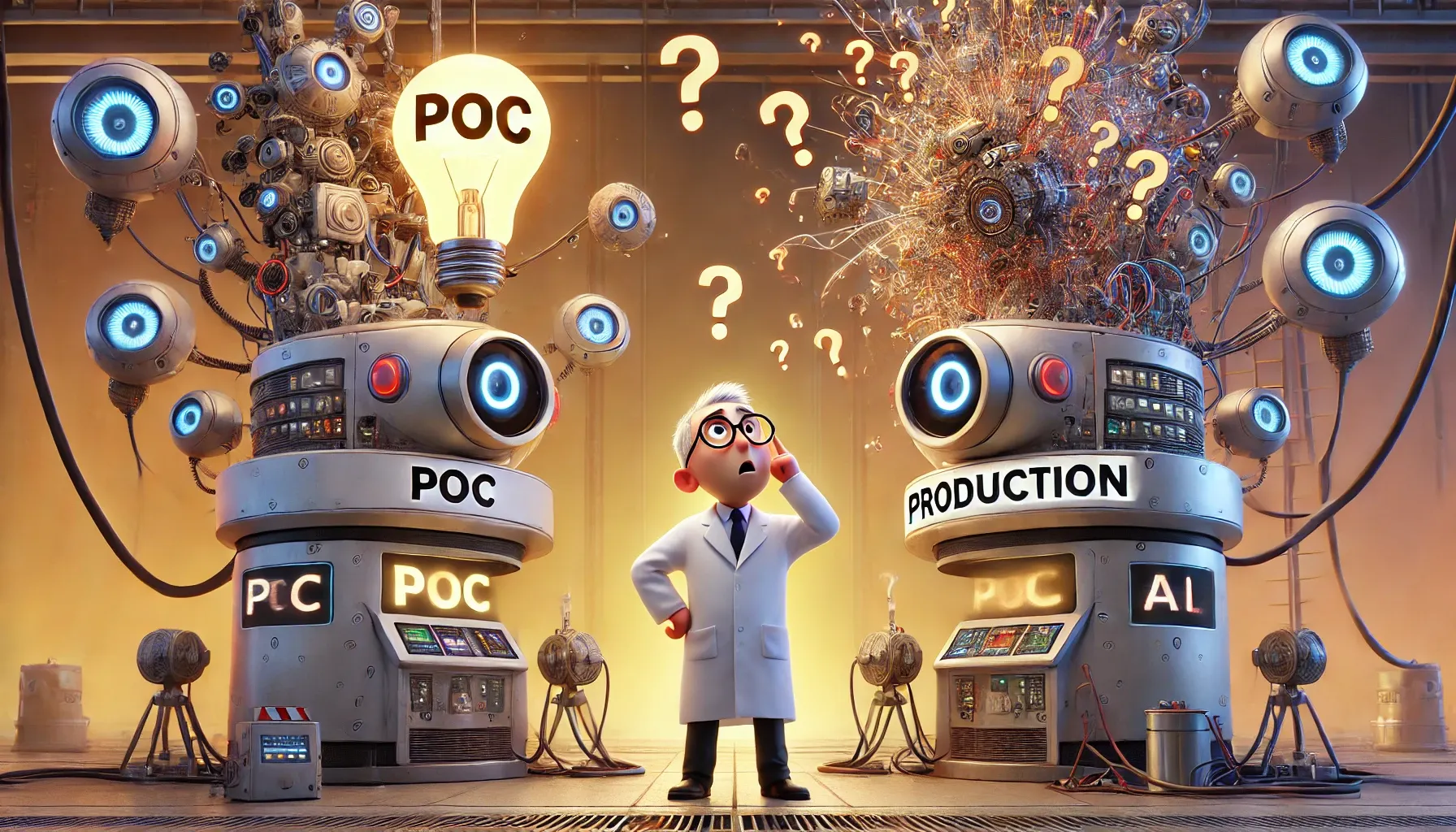
Generative AI has emerged as a transformative technology with the potential to revolutionize various industries. However, despite initial enthusiasm and successful proofs of concept (POCs), many generative AI initiatives fail to progress to full-scale implementation.
This analysis examines the key factors contributing to this trend and provides insights for organizations looking to bridge the gap between POC and production.
Key Findings
- The apparent simplicity of foundation model APIs often masks the complexity of real-world implementation.
- Scaling challenges become evident when moving from limited POCs to full-scale deployment.
- Many organizations underestimate the resources required for long-term AI maintenance and optimization.
- Ethical considerations and regulatory compliance often receive insufficient attention during the POC stage.
- Integration with existing systems presents significant hurdles not fully addressed in most POCs.
1. The Illusion of Simplicity
Many POCs are built using off-the-shelf foundation model APIs. While these can quickly demonstrate the potential of generative AI, they often create an illusion of simplicity.
Why it's a problem: When moving beyond POC, companies realize that a one-size-fits-all approach doesn't address their specific needs. The complexity of tailoring the AI to understand company-specific nuances and domain expertise becomes apparent, often overwhelming teams unprepared for this challenge.
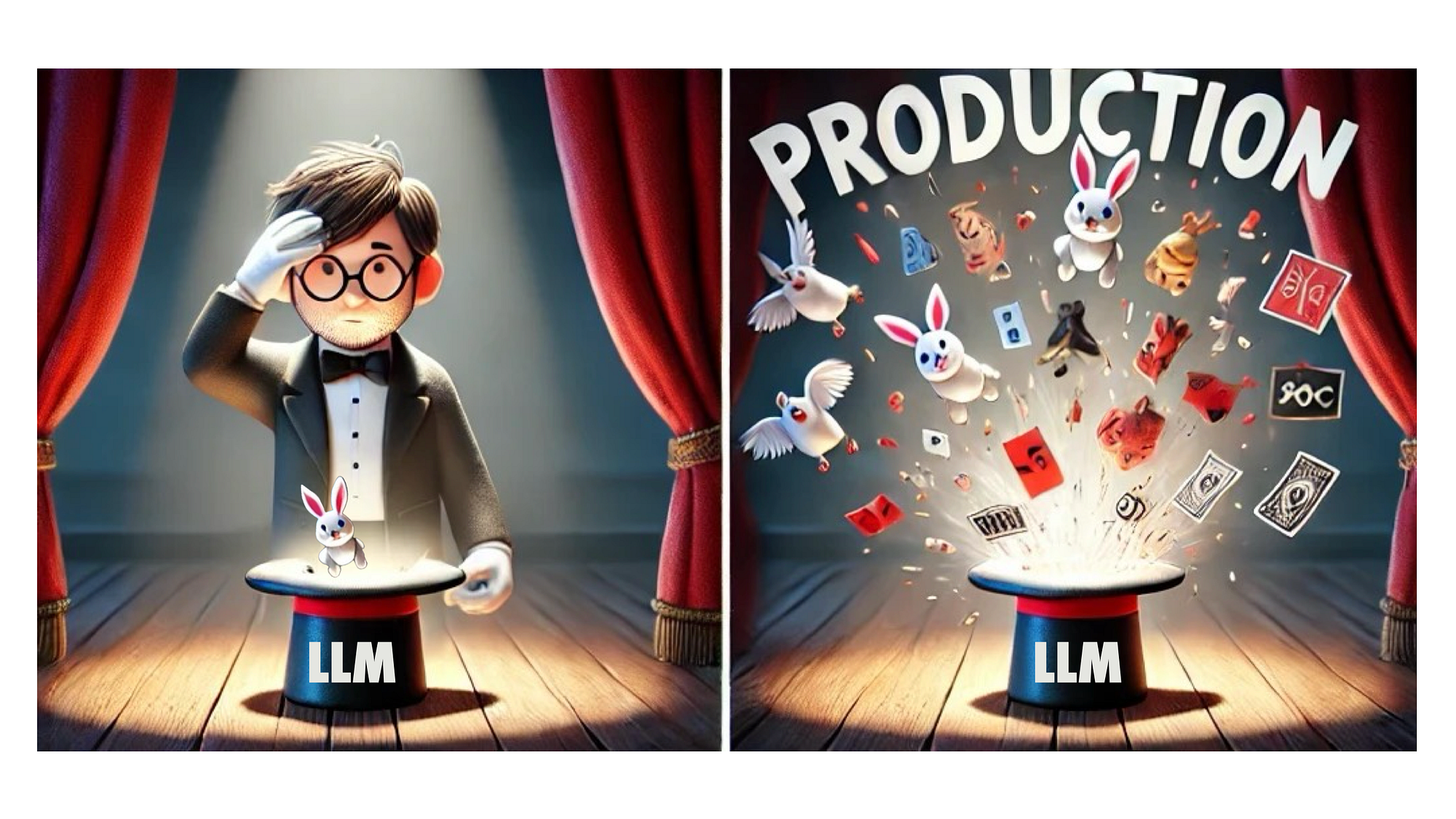
LLM's tend to adhere to prompts in limited POCs, but once they go into production, they tend to go haywire with little to no control on the output
- Prompts that demonstrate high efficacy in controlled POC settings often fail to maintain consistent performance when deployed at scale.
- Minor alterations to prompts can disproportionately impact system stability and outputs.
- Identical prompts and content inputs to large language models (LLMs) frequently yield substantially different results across multiple interactions.
2. Scaling User Support and Management
Most POCs don't fully engage with the complexities of real-world business processes or the handling of sensitive information. They often gloss over the need for detailed technical explanations or handling of exceptions.
Why it's a problem: In production, AI systems need to navigate complex scenarios, balance empathy with factual information, and avoid potential legal issues. Many POCs don't account for these intricacies, leading to roadblocks when trying to implement in real-world situations.
Production-grade AI systems need to provide accurate technical information without giving specialized advice, handle exceptions, and explain complex concepts in user-friendly terms.
3. The Resource Reality Check
POCs often focus on limited use cases like summarisation/text generation/text transformation with a small user base. This doesn't reveal the true challenges of scaling.
Why it's a problem: As projects move towards production, the need to handle a wide variety of user queries, maintain context over long conversations, and integrate with existing systems becomes evident. Many companies underestimate the resources required (skills & cost) to address these scaling issues. Moving to production requires significant ongoing resources for maintenance, updates, and monitoring.
Many companies underestimate the long-term commitment required, leading to projects being shelved when the true cost becomes apparent.
4. Ethical and Regulatory Compliance Hurdles
Many POCs focus on functionality, overlooking the critical aspects of ethical AI use and regulatory compliance.
Why it's a problem: As projects move towards production, ensuring consistent ethical behavior and compliance with industry regulations becomes paramount. Many companies find themselves ill-prepared for the complexity of implementing robust ethical guidelines and staying up-to-date with changing regulations.

As the scale increases, it becomes harder for the LLM to keep up with the context switches and real-world integrations. Also, LLM laziness kicks in causing working POC prompts to fail without warning.
5. Integration Challenges
POCs typically operate in isolation, not fully integrated with existing systems. They can sometimes set unrealistic expectations about the capabilities of AI.
Why it's a problem: Real-world implementation often requires seamless integration with legacy systems, which can be complex and time-consuming. When moving to production, limitations become apparent, and stakeholders may become disillusioned if the AI doesn't live up to the expectations set by the POC.
Bridging the POC-Production Gap
While these challenges are significant, they're not insurmountable. At Riafy, we've successfully navigated these hurdles with clients like IndiGo and MG Motor. The key is to approach GenAI systems with a clear understanding of the road ahead.
Rather than viewing POCs as mini-versions of the final product, they should be treated as learning opportunities to uncover the real challenges of implementation.
Design POCs that -
- Engage with real company data and processes
- Test integration with existing systems
- Include ethical and compliance considerations from the start
- Provide realistic estimations of resource requirements
By addressing these aspects early, companies can create more robust POCs that provide a clearer pathway to production.
While the journey from POC to production is complex, it's where the true value of generative AI is realized.
The future of AI is bright, but it requires a committed, thoughtful approach that goes well beyond the initial excitement of a POC. As we continue to innovate in this space, I'm excited to see more companies successfully bridge the gap between POC and production, unlocking the full potential of generative AI.