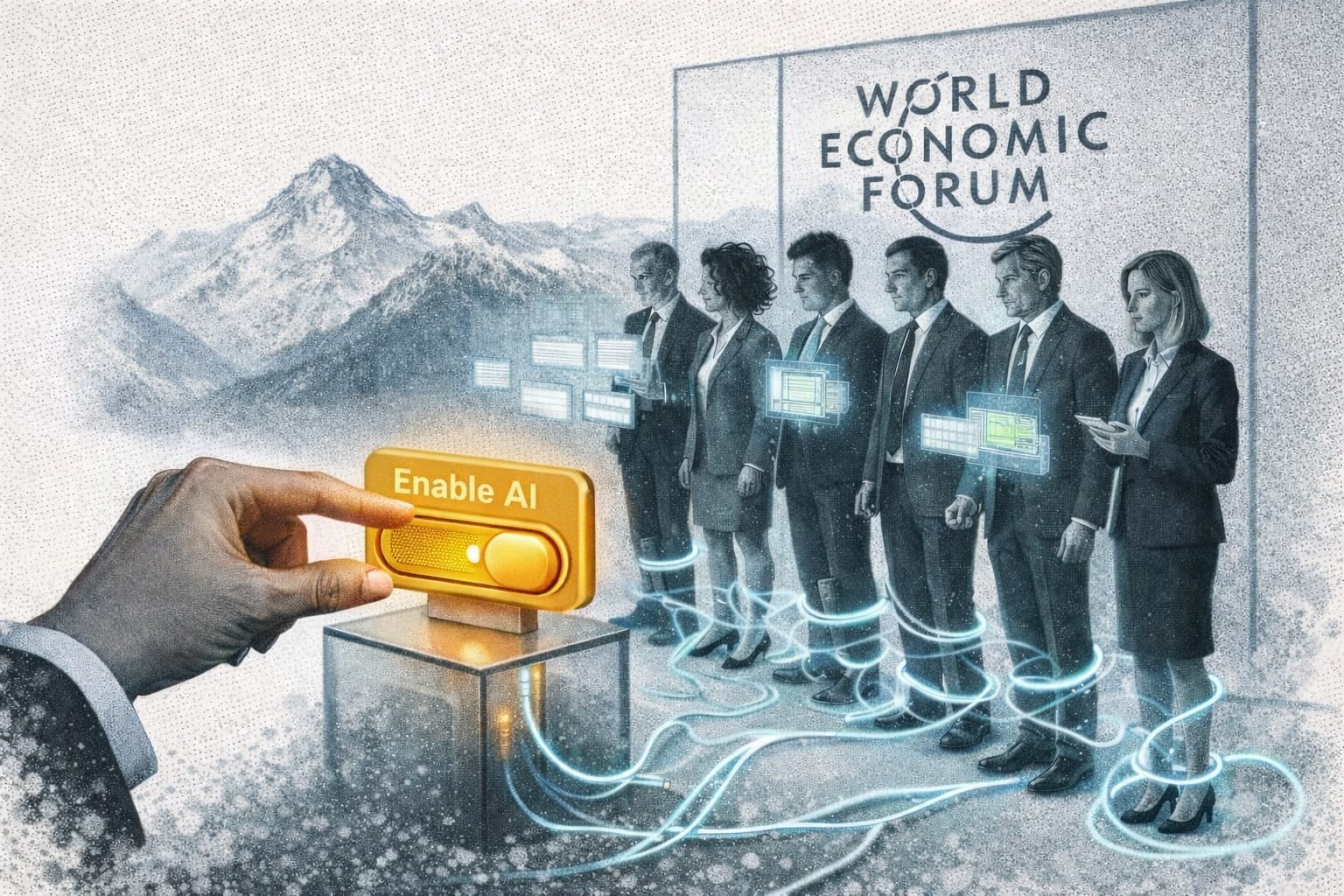
When I heard Mark Carney's landmark address at Davos this year, I wasn't thinking about trade routes or NATO. I was thinking about the "Enable AI" toggle sitting in almost every enterprise software stack today.
Carney stood on that stage and delivered a brutal reality check to the world's middle powers. He argued that the old "rules-based international order" - the one we all pretended kept the world fair - is dead. It has been weaponized by superpowers who now use integration as a tool for subordination.
As I listened, I realized: This is so true, even for Big Tech.
The Geopolitics of the "Toggle"
For years, we've lived under a "rules-based tech order". We integrated our businesses into massive platforms because we believed the trade-off - convenience for compliance was a fair deal.
But now, we've reached a rupture. These platforms are building AI into their core and forcing it down the throats of their customers. For the enterprise, it's low-effort + quick reward. But it's also a trap.
Just as Carney called out superpowers for using economic integration to force other nations into line, Big Tech is using "platform AI" to turn every business into a vassal state. If you rely on their generic, built-in AI, you aren't a partner anymore. You're just a node in their network, feeding their models and settling for their "average" results.
The Greengrocer's Choice
Carney's most powerful moment was quoting Václav Havel's story of the Czech greengrocer - the man who puts a slogan in his window just to avoid trouble with the regime. He doesn't believe it; he just wants to stay "integrated".
In 2026, many CEOs are that greengrocer. They click "Enable AI" on their legacy platforms not because it gives them a significant competitive edge, but because they don't want to be the only ones left behind.
But Carney's message was clear. We cannot "live within the lie" of mutual benefit when the platform is designed to lock you in.
"Living in Truth" = The End-to-End AI Stack
Carney urged nations to build their own resilience - to be able to "feed themselves, fuel themselves, and defend themselves". In the tech world, that means owning your stack.
At Riafy, we've made a choice that is often harder and slower: We build AI into the core of our own end-to-end stack because we didn't want to be stuck in the 50th percentile. Using platform-native AI is a regression to the mean. It's built for the masses, which means it delivers average results. If everyone uses the same "Copilot", everyone gets the same "average" outcome.
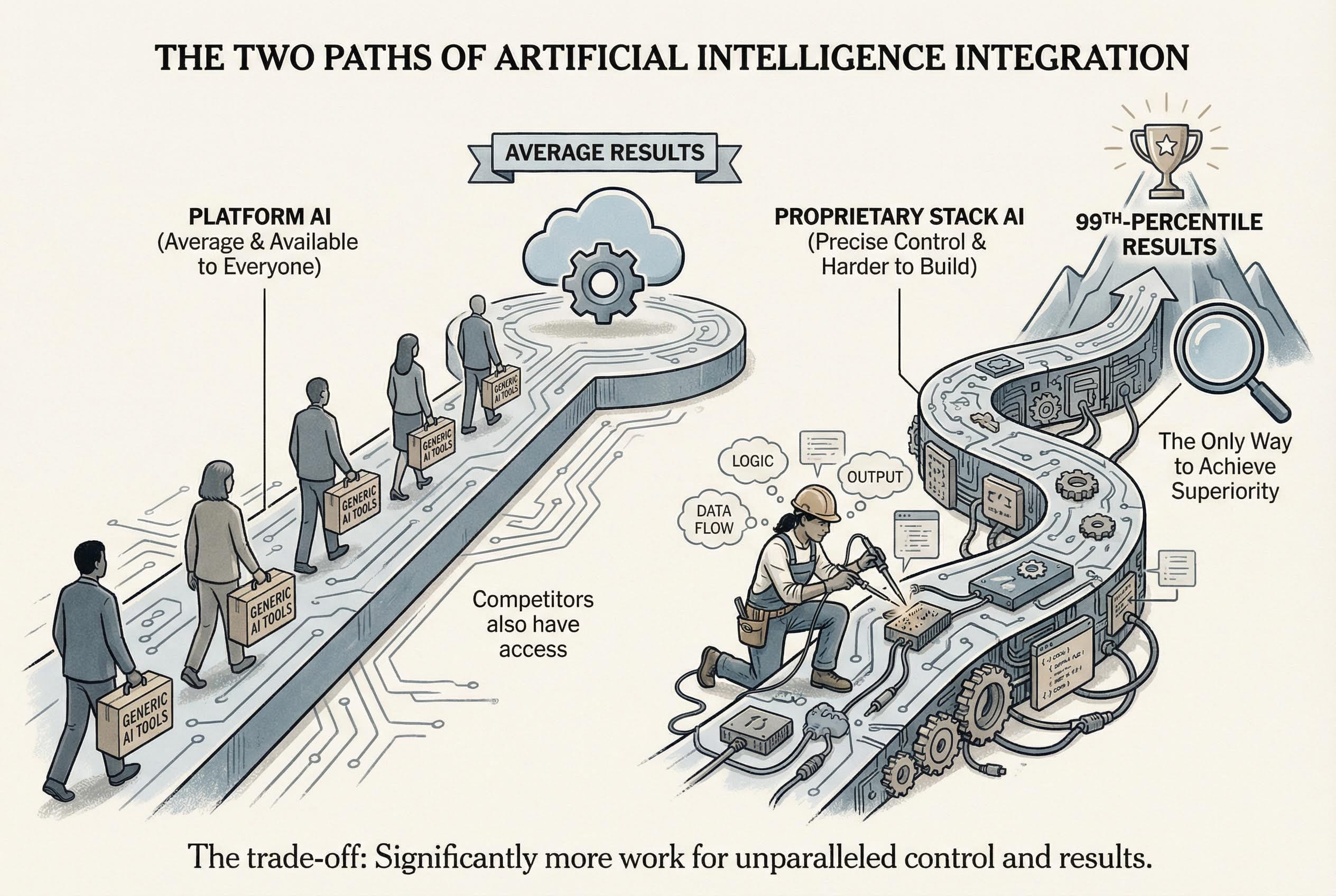
We wanted to create systems that attain the 99th percentile.
When you build the AI into your own proprietary stack, you have precise control of the:
- Logic
- Data flow
- and most importantly, the Output
It's significantly more work, but it's the only way to achieve 99th-percentile results.
Sovereignty is the Only Moat
Carney's "principled and pragmatic engagement" for nations is exactly how we should view AI. We don't have to be "isolationist", but we must be sovereign.
The "easy" AI is a tool for compliance. It's what you do when you want to look like you're innovating without doing the work. The "hard" AI - the end-to-end, agentic stack - is what you do when you want to win.
The old order is gone. The superpowers of tech are no longer looking out for your competitive advantage. It's time to take the sign out of the window, stop settling for the "platform average", and start building for yourself.
Sovereignty isn't just a geopolitical goal. It's the only competitive advantage left.