
Everyone loves the headline.
"Trillions of tokens"
It sounds like victory. It isn't. It's an exam.
At Riafy, our R10 system now operates at trillion-scale on Google Cloud's Vertex AI. That milestone isn't a vanity metric; it's a maturity test across reliability, governance, and product design.
You don't "scale to trillions". You survive trillions - by engineering for it.
So let's set the stakes for this series. Here's why volume at this level is a big deal - and why most teams aren't ready for what it reveals.
Tokens aren't the story. Outcomes are.
A trillion tokens is just exhaust.Outcomes are the engine.
R10 treats every request as a unit test for user value: did we resolve the task, uphold policy, and meet latency? If not, more tokens only amplify failure. At this scale, token hygiene becomes a product discipline:
- Fine-tuned models. Tighter instructions. Externalized context.
- Retrieval that adds signal, not noise.
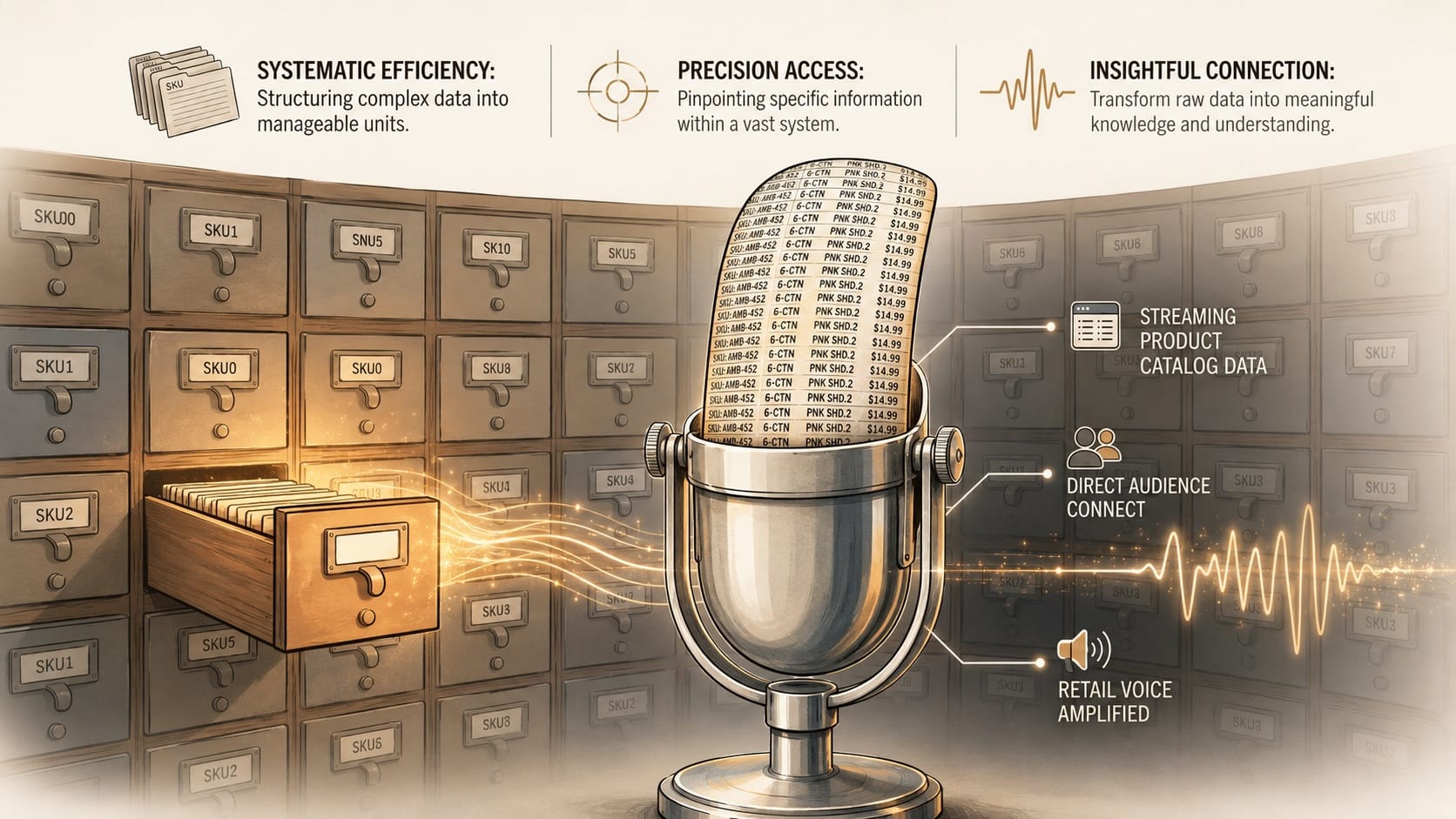
- Caching that turns repetition into speed.
Trillions don't prove "clever AI". They prove whether your system can deliver outcomes at high pressure - reliably, repeatedly, and predictably.
Volume exposes reliability debt - fast.
Weekend spikes lie. Sustained load does not.
R10 runs mixed workloads - chat, search, batch enrichment, and embeddings - through one backbone. Under that load, any hidden debt shows up immediately: flaky retries, slow tails, brittle prompts, mismatched timeouts. The only defense is operational discipline:
- P95 and P999 are both real. We design for the median and protect the tail.
- Degradation ladder. Small/fast by default → elevate only when signals require it → human review when risk demands it.
- Boring failures. Idempotency keys, backpressure, exponential backoff. Drama-free outages.
Reliability isn't a platform afterthought. It's the user experience.
Model size is a routing decision, not a belief system.
"Bigger model = better results" is the most expensive superstition in AI.
R10 routes most traffic to efficient models and bursts up only when ambiguity, risk, or user impact crosses a threshold. That decision is data-driven - based on task difficulty, retrieval quality, and eval scores. The result: speed when we can, power when we must.
Right-sizing isn't austerity; it's fit for purpose.
Caching isn't a tweak. It's a strategy.
At this scale, caches are not optimization - they're architecture.
R10 employs layered caching:
- Context caching for deterministic transforms.
- Embedding caching with sensible TTLs for high-repeat content.
- Feature caching for precomputed signals that de-risk live calls.
We review cache hit rates like SLAs. When hits climb, tails shrink. When tails shrink, user trust grows.
Evaluation is continuous, not quarterly.
Dashboards don't fix systems. Iteration does.
R10 runs continuous, business-tied evals across high-volume routes - accuracy, safety, satisfaction. We complement automatic checks with targeted human review on sensitive surfaces. Every week, we run a Top 10 review of costly or brittle scenarios and ship refactors. Not reports. Fixes.
Governance is a feature users can feel.
Trillion-scale multiplies everything - good and bad.So guardrails must be visible in behavior, not buried in docs.
- Minimize sensitive data in prompts. Pass pointers, not payloads.
- Redact at the edge. Don't let raw PII slosh through pipelines.
- Policy as code. Versioned safety rules with auditable rationales.
Users don't ask for governance in surveys. They experience it as confidence.
Why this milestone matters
Because it means R10 can operate under real pressure. It is a production-grade GenAI system that has -
- A backbone that holds. Mixed workloads, one control plane, predictable tails.
- Feedback loops that work. Ability to change models, prompts, and policies without chaos.
- Teachable system. New use cases plug into existing guardrails, observability, and playbooks.
That's the real headline: not that we consume trillions of tokens, but that our system integrity scaled with it.